Five years. Half a decade. 1,826 days of showing up, serving, learning, and growing. When you reach a milestone like that, you don’t just throw a party; you do something that embodies everything you’ve learned. For HIECH Foundation’s fifth anniversary, we traveled to the edge of the map, to a village that exists between water and sky: Nzulezu.
Manus Amore, “Hands of Love,” wasn’t just a project. It was a pilgrimage. It was a four-day immersion into a community so remote that simply reaching it requires the kind of commitment that mirrors the commitment required to sustain five years of humanitarian work.
November 21-24, 2024. Four days that felt like four months. Four days that redefined what anniversary celebration could mean.
The Journey to Nzulezu
Let’s start with geography, because understanding Nzulezu requires understanding its location, or rather, its spectacular isolation.
The Western Region. Hours from Accra. Further hours on roads that test vehicle suspension and driver patience. Then the road ends, and the real journey begins.
Nzulezu is built entirely on stilts above Lake Tadane. Not near the water, on the water. Every building, every pathway, every inch of life elevated above a lake that has cradled this community for generations. You don’t drive to Nzulezu. You don’t walk to Nzulezu. You paddle.
Our team, volunteers, supplies, and determination loaded into traditional wooden canoes. The lake stretched before us, mirror-smooth, reflecting sky and trees and possibilities. The canoe operators paddled with practiced rhythm, navigating waters they knew intimately, taking us to a place Google Maps barely acknowledges exists.
And then Nzulezu emerged from the distance. A village floating on stilts, defying conventional understanding of where humans can build community. Homes, schools, churches, and lives are all elevated and all connected by wooden walkways, all existing in harmony with water that never stops moving beneath.
This was where the HIECH Foundation would celebrate five years.
Why Nzulezu for Our Fifth Anniversary?
We could have thrown a gala in Accra. Could have rented a venue, invited donors, given speeches, and shown impact presentations. That’s what organizations typically do for anniversaries.
But HIECH Foundation has never been typical.
Five years of work taught us that impact happens in remote places, with overlooked communities, in moments when showing up requires effort. Celebrating our fifth anniversary in comfort while communities like Nzulezu remained underserved felt wrong. If we were going to celebrate five years of commitment, we should do it by recommitting to reach further, go deeper, and serve harder.
Nzulezu represented everything we’d learned: that geography shouldn’t determine access to education, that remote doesn’t mean unimportant, and that hands of love can reach anywhere when hearts lead the way.
Four Days of Immersion
This wasn’t a one-day donation drop. Manus Amore was comprehensive, intentional, and relational. Four days of living in Nzulezu, sleeping in the village, waking to the sound of canoes on water, and experiencing life where liquid meets land and community thrives despite isolation.
Day One: Arrival and Connection
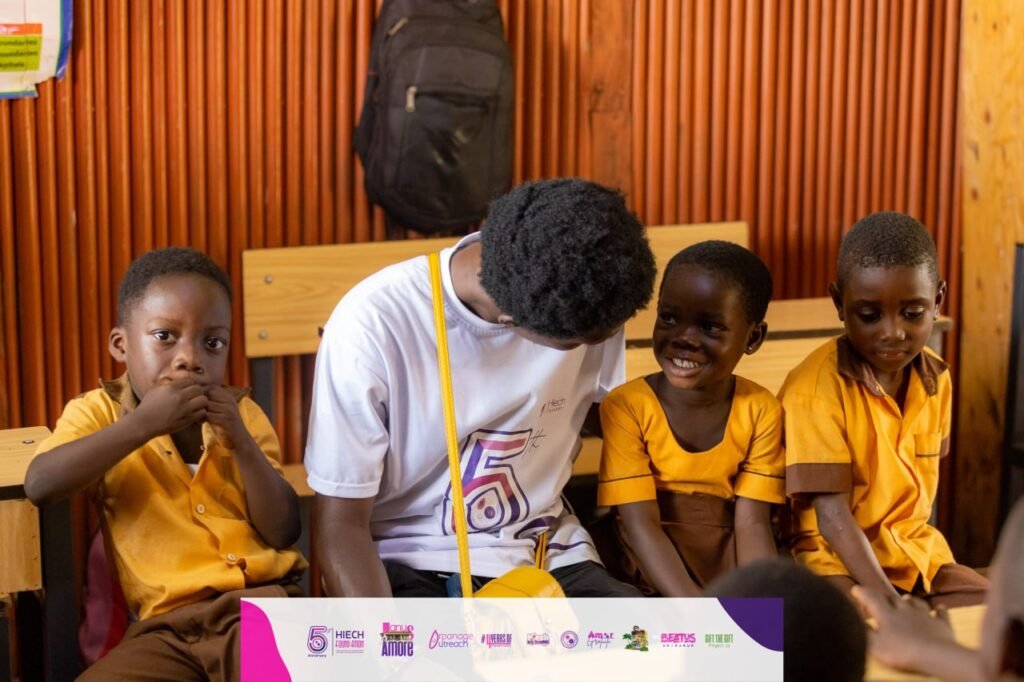
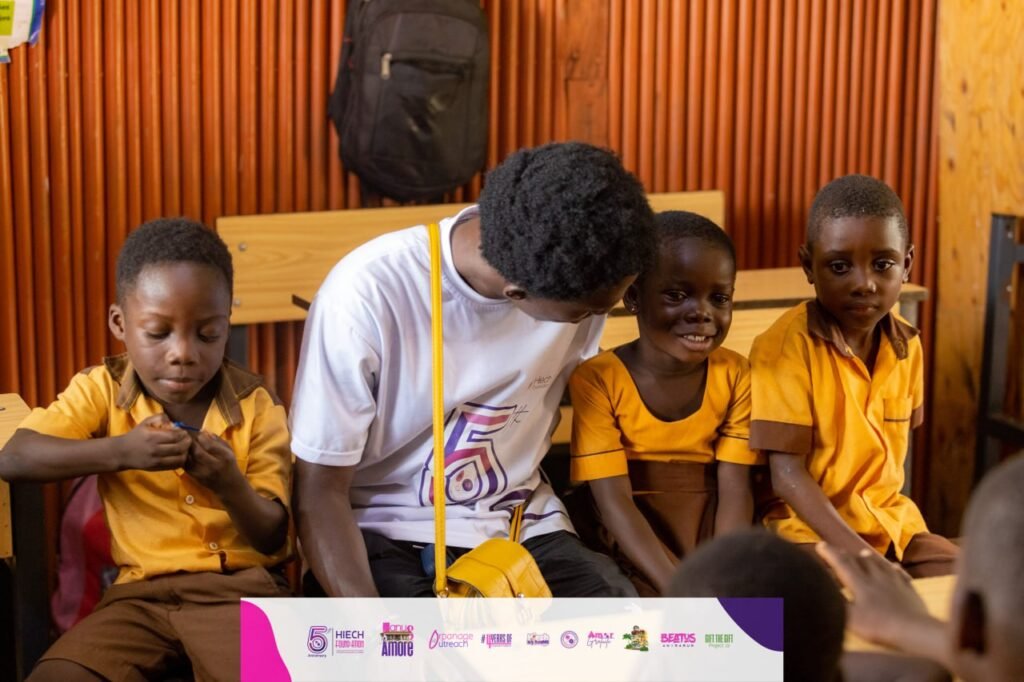
The first day was about presence. Meeting community leaders, greeting educators, introducing ourselves to students who’d heard strangers were coming but didn’t quite believe it. “People don’t come here,” one teacher told us. “We’re too far. Too difficult to reach.”
But we came. And we stayed.
Day Two: Educational Impact
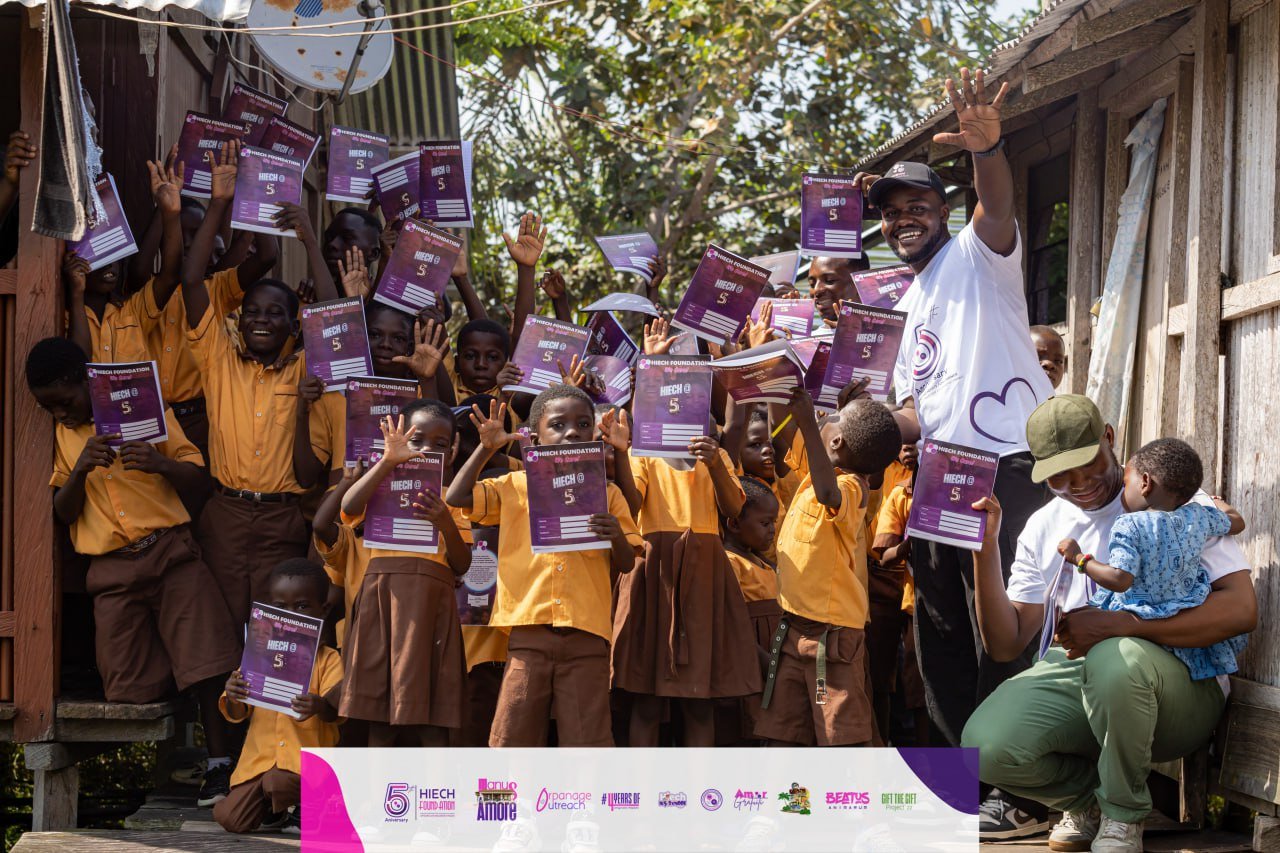
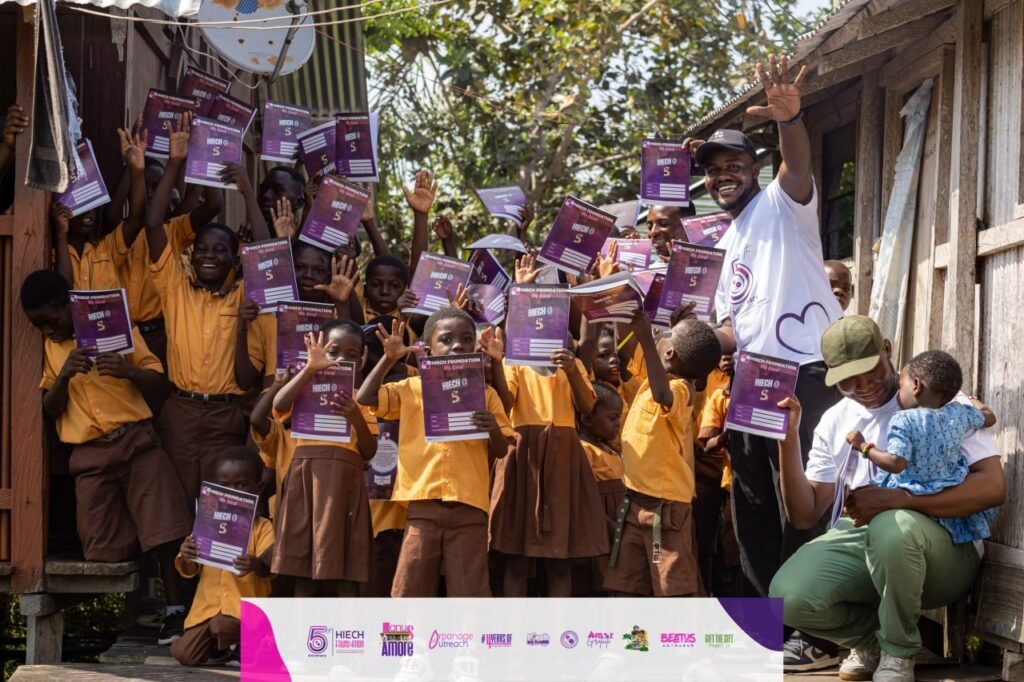
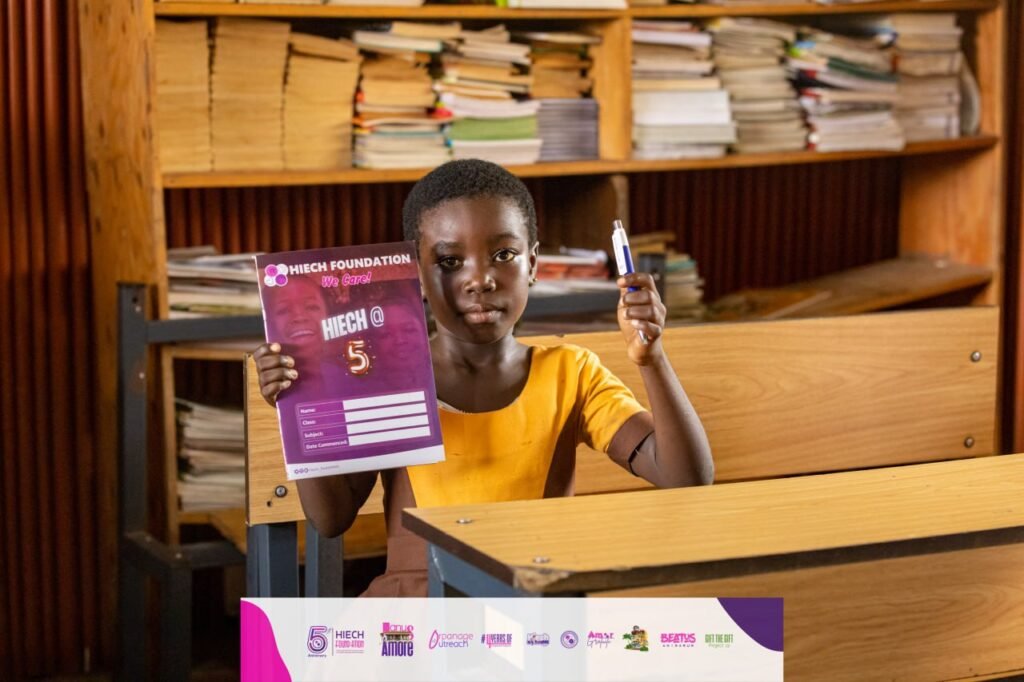
Over 50 students gathered at the school, the entire student body of Nzulezu. These weren’t children who took education for granted. These were students who canoed to school daily, who understood that their location made resources scarce, and who’d learned early that wanting education and accessing quality education were different things.
We distributed learning materials thoughtfully chosen for their needs: textbooks for subjects they’d been studying without proper resources, notebooks that would last the term, writing implements, and reading materials. Items that seemed basic until you remembered the journey they’d taken to arrive here.
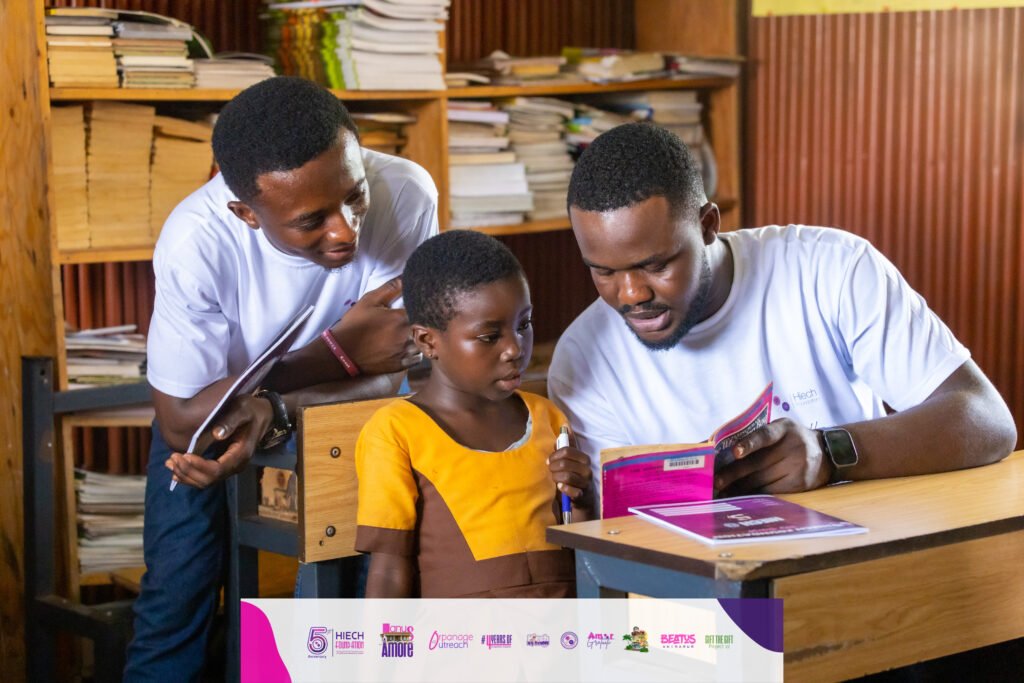
But Manus Amore went beyond supplies. We spent time mentoring students on career choices, conversations about possibility, about paths beyond fishing and farming, and about how education opens doors even when you live where roads don’t reach.
One student, maybe from Form 2, asked, “Sister, can someone from Nzulezu become a doctor?” The question wasn’t naive; it was existential. Could someone from here become someone who went there?
“Yes,” we told her. “Education builds bridges. Where you start doesn’t determine where you finish.”
Her eyes held that answer like treasure.
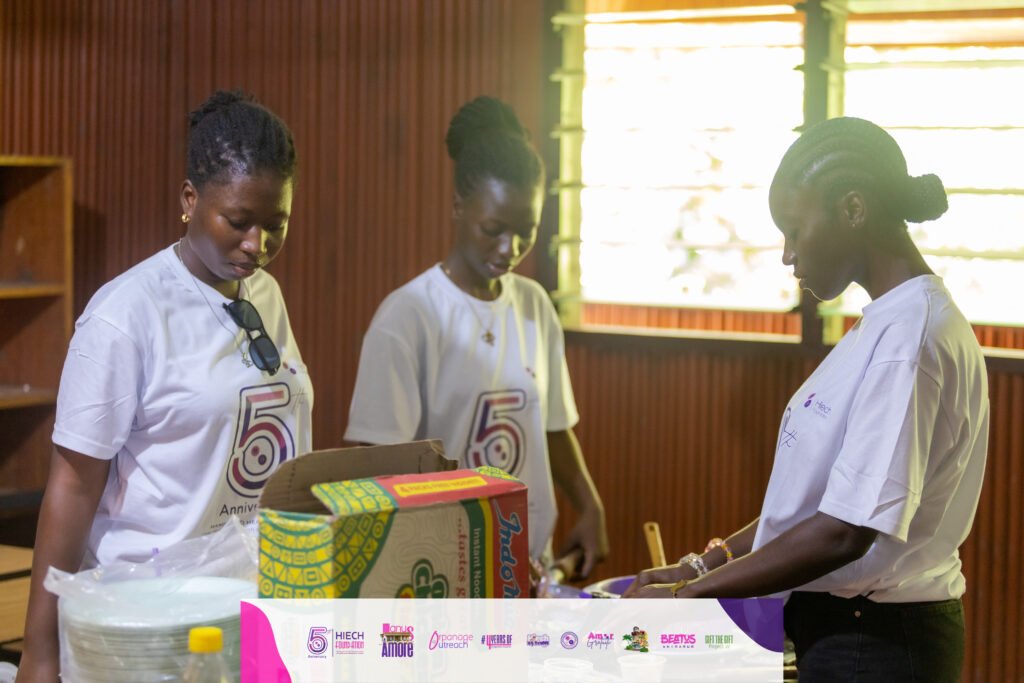
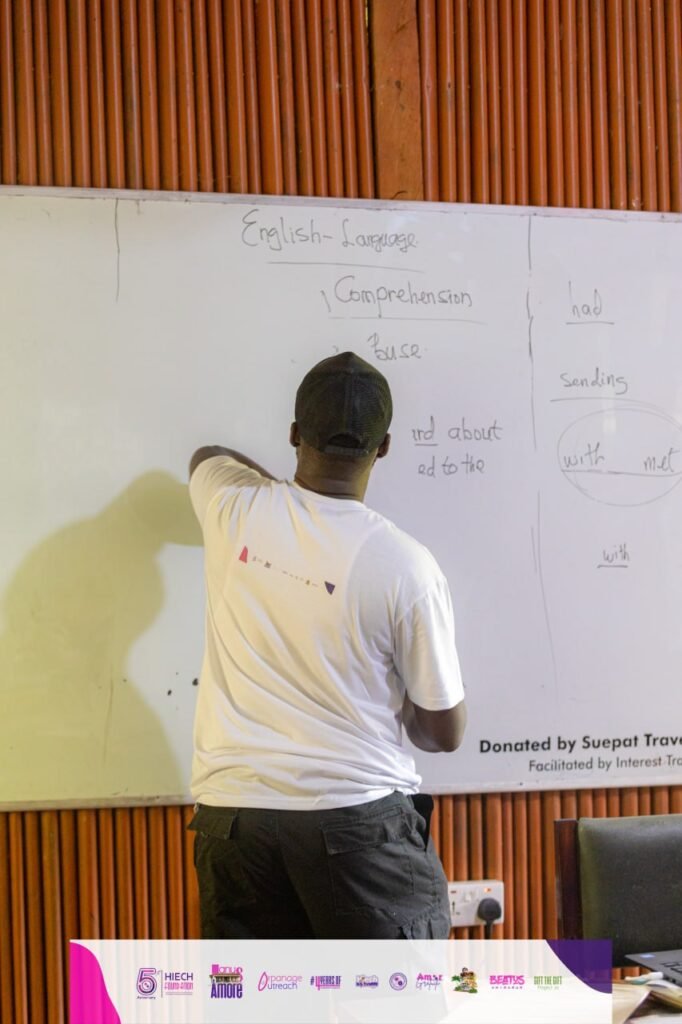
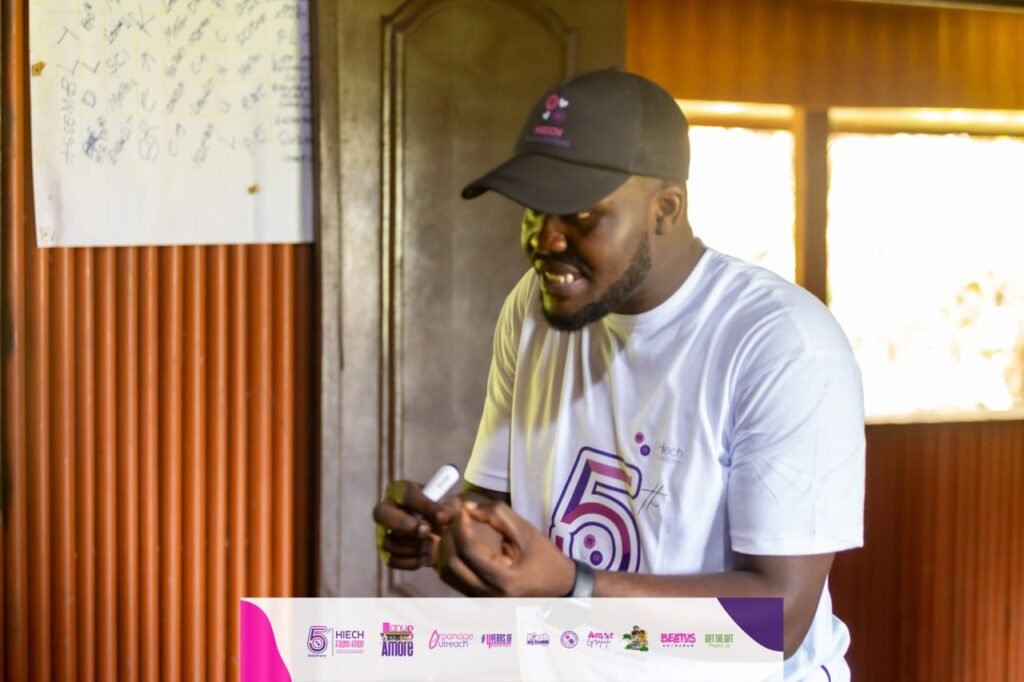
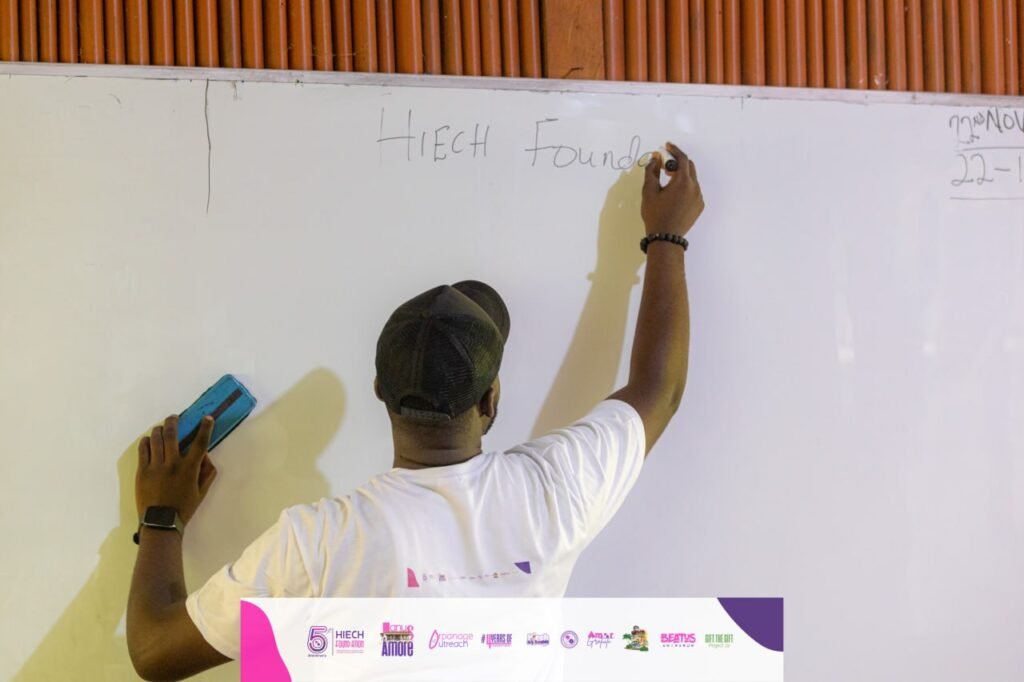
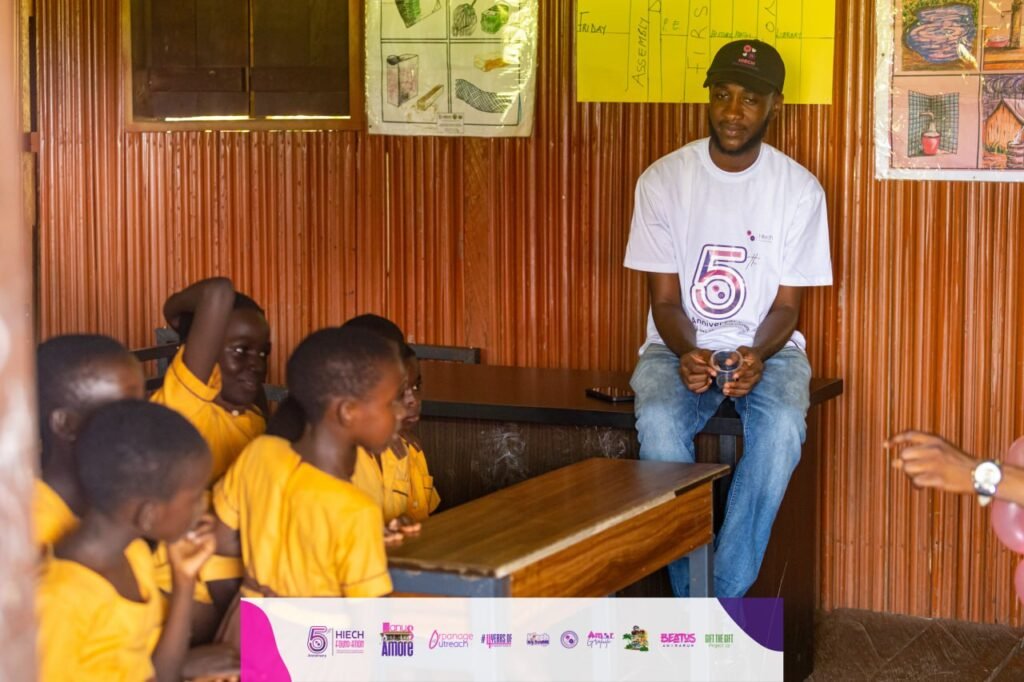
Day Three: Deeper Relationships
By the third day, we weren’t visitors anymore. We’d shared meals with families, learned traditional songs from children, and heard stories from elders about Nzulezu’s history. We’d walked (carefully) on wooden pathways above water, experienced what life looks like when every step requires awareness, and every movement acknowledges the lake beneath.
The mentoring continued, but now it felt like family conversations. Students asked deeper questions. We gave more honest answers. Teachers shared their struggles, not as complaints, but as context. Community members opened up about dreams and challenges and the complicated reality of loving a place that the world largely forgets.
Day Four: Farewell and Forever
The final day was bittersweet. We’d completed our mission, with over 50 students impacted, supplies distributed, relationships formed, and career mentoring provided. But leaving felt premature. Four days weren’t enough. Four weeks wouldn’t have been enough.
The community gathered to see us off. Children who’d been shy on day one now hugged volunteers freely. Teachers who’d been cautious now spoke openly about hoping we’d return. Community leaders expressed gratitude not just for what we brought but for the fact that we came at all.
One elder said something that captured everything: “You celebrated your anniversary here. With us. That tells us we matter to you. We won’t forget that.”
What Nzulezu Taught Us
Five years of work, and Nzulezu still taught us new lessons:
Remote doesn’t mean unreachable. Yes, Nzulezu is difficult to access. But “difficult” isn’t “impossible.” Impact reaches anywhere commitment leads.
Education thrives everywhere given the chance. Those 50+ students in Nzulezu want education just as desperately as students in Accra. Their location doesn’t diminish their hunger to learn.
Career mentoring matters as much as materials. Supplies help students learn today. Mentoring helps them imagine tomorrow. Both are essential.
Celebration and service aren’t separate. The best way to celebrate five years of work is to work. The best anniversary gift is giving. The best party is presence.
Why “Hands of Love”?
Manus Amore—the name wasn’t random. After five years, we’d learned that hands do what hearts feel. Love isn’t abstract; it’s concrete. It’s paddling for hours to reach a remote village. It’s sleeping on floors because that’s what’s available. It’s spending four days instead of four hours because a relationship requires time.
Hands of love reach across water. They build bridges where geography builds barriers. They refuse to let “too far,” “too difficult,” or “too remote” become excuses for inaction.
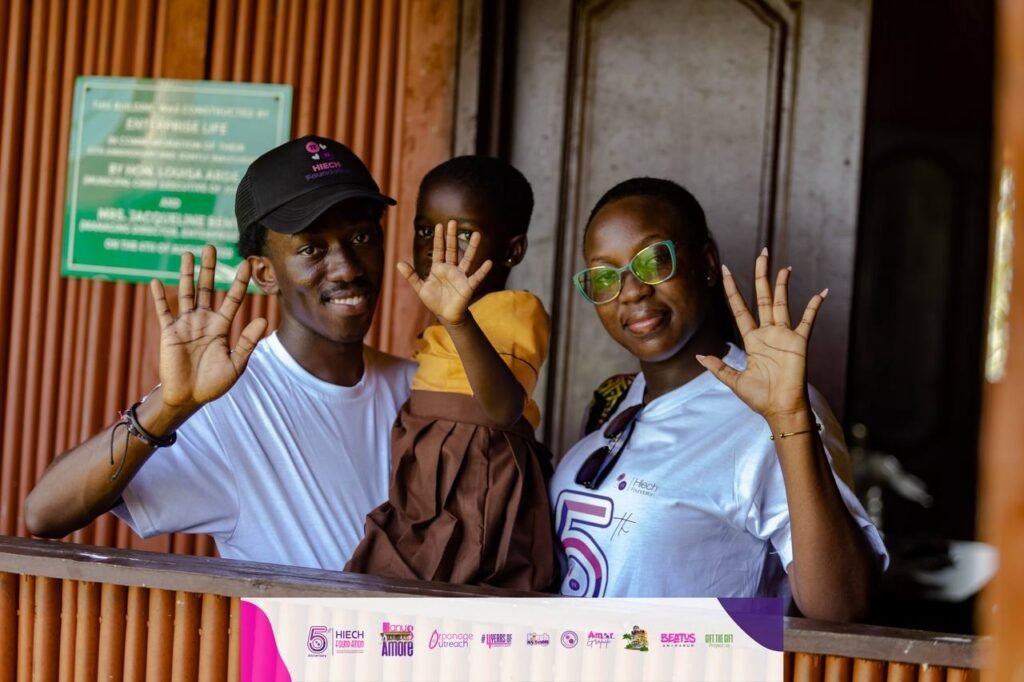
Our hands brought supplies. But more importantly, our hands held students’ hands during mentoring. Our hands helped carry water. Our hands joined theirs in traditional songs. Our hands proved that distance is no match for determined love.
The Five-Year Mark
Anniversaries are milestones for reflection. Five years ago, HIECH Foundation started at Teshie Children’s Home, nervous and hopeful. Now we’re paddling to remote villages for four-day immersions. The growth is staggering.
But here’s what hasn’t changed: the commitment to showing up. The belief that community can reach anywhere. The understanding that impact requires presence, not just presents. The determination to serve those whom geography might otherwise isolate.
Nzulezu was the perfect embodiment of five years of learning, growing, and expanding. It honored our past while pointing toward our future. It celebrated how far we’ve come while reminding us how far we can still go.
To our donors who made Manus Amore possible: you funded our fifth anniversary. You sent us to the literal edge of the map to celebrate five years by serving. You proved that milestone celebrations can be mission focused. Thank you for believing that the best way to honor five years of work is to keep working.
To the over 50 students of Nzulezu: you reminded us why we started. Your hunger for education, your gratitude for mentoring, and your belief that you can become anything despite where you’re from, these are the reasons HIECH Foundation exists. Keep learning. Keep dreaming. Keep believing.
To the community of Nzulezu: thank you for welcoming us, teaching us, and sharing your lives with us. You live in one of Ghana’s most spectacular and challenging environments. You’ve built community where others see only obstacles. You embody resilience, and it was an honor to spend four days learning from you.